Physical Address
304 North Cardinal St.
Dorchester Center, MA 02124
Physical Address
304 North Cardinal St.
Dorchester Center, MA 02124

The Maharashtrian saree represents an exceptional Indian saree style because it delivers both comfort and cultural value to its users. The Nauvari saree which is also known as the Kashta saree presents a traditional drape that people can easily identify through its combination of dhoti-like design elements and stylish yet functional features. The Maharashtrian style requires nine yards of fabric which enables dancers to move freely while preserving their royal appearance.
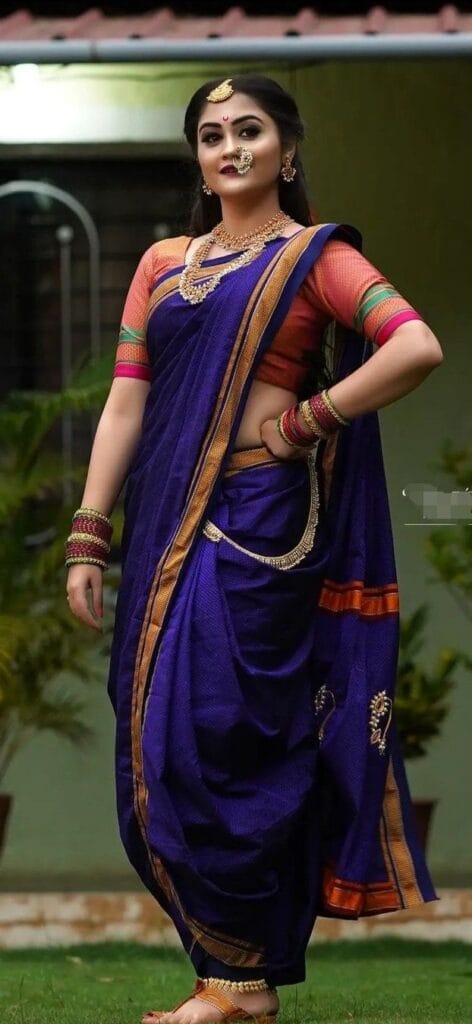
The Maharashtrian saree pattern is centuries old and is originally connected with women warriors of the Maratha empire. As other drapes restrict the leg movement, this pattern ensures freedom of movement, which is beneficial for horse riding, farming, and even fighting. Women from Maharashtra embraced this pattern because it was convenient as well as beautiful, inspired by queens and women warriors of the Maratha empire.
It became a part of the celebrations, the festivals, and the everyday rural life with the passage of time. To this day, the image of women in nine-yard sarees at Ganesh Chaturthi or Lavani dances is one of the most symbolically representative aspects of Maharashtrian culture.
The Maharashtrian saree is distinct from the other types of sarees due to its peculiar characteristics:
There are minor differences in draping the Maharashtrian style saree based on the community and occasion:
Traditional Nauvari Draping – The nine-yard saree is draped without petticoat. The lower portion is draped in the style of dhoti, while the upper pallu is pleated neatly and brought across the shoulder.
Contemporary Nauvari Draping – A six-yard saree draped as nauvari with the assistance of stitched pleats or pre-draped pleats for convenience.
Festival Draping – Free-flowing pleats and a longer free pallu, usually adorned with traditional ornaments such as the nath (nose ring) and green bangles.
Dance Draping – The saree is draped in a more secure way for free movement in Lavani, and the pallu is draped shorter for dramatic movements.
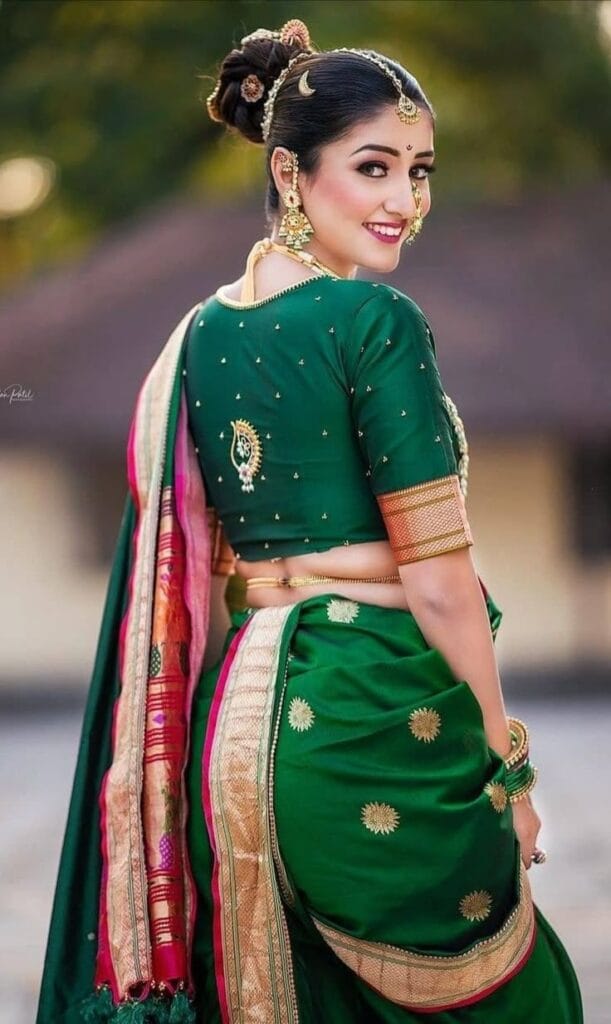
The elegance of the Maharashtrian style saree is in its drape. Here is a step-by-step guide on how to wear it in brief:
Final Adjustments
Make sure the pleats are even and the saree drapes smoothly. The golden border (if applicable) would be visible for a classy finish.
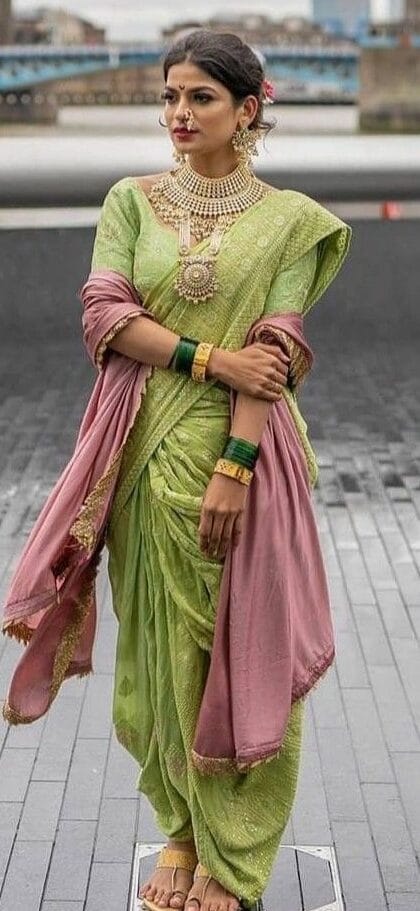
Maharashtrian saree would not be complete without the traditional accessories and jewelry that enhance its beauty:
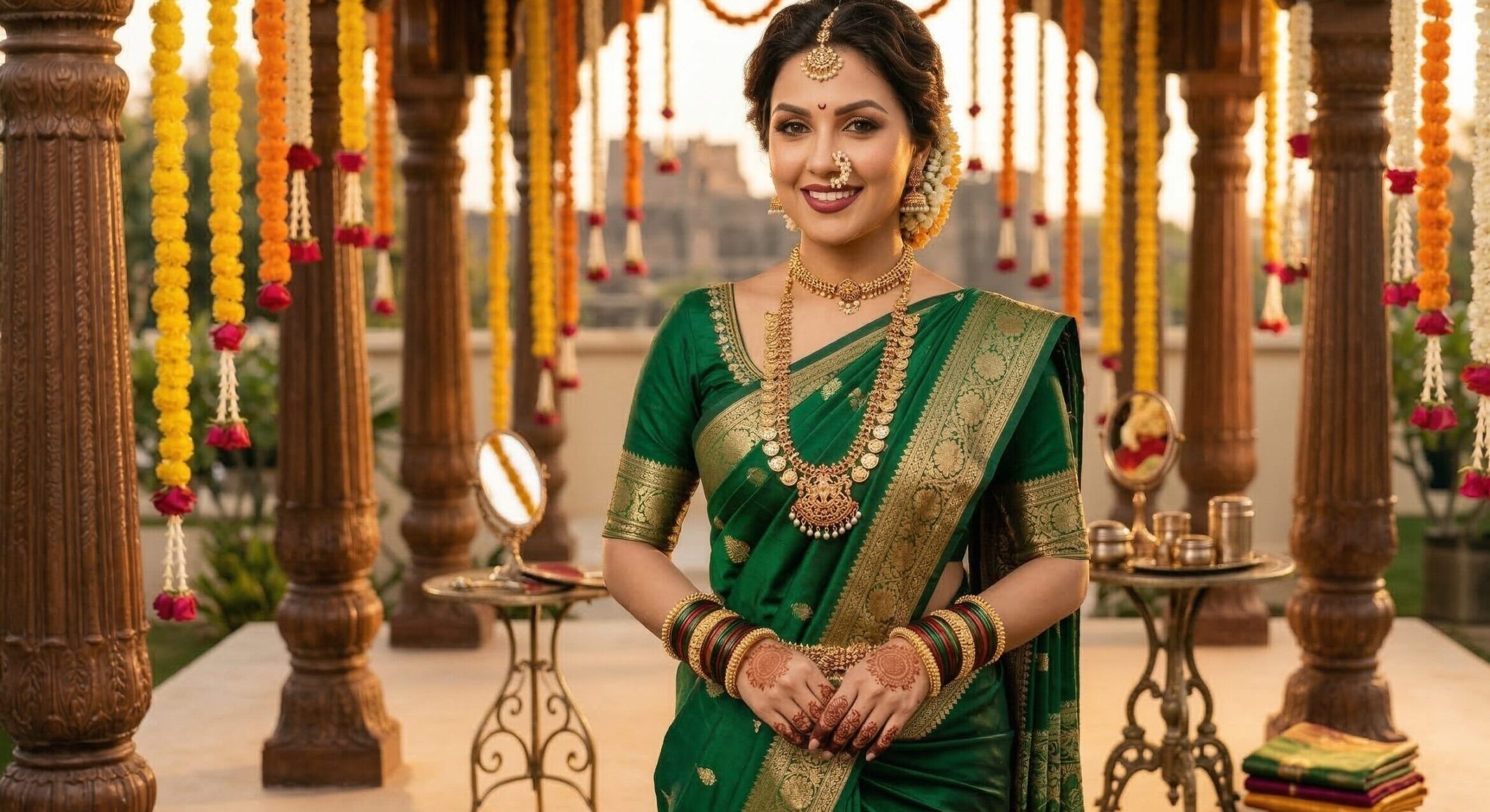
The Maharashtrian style saree is not apparel—it is a living tradition.
With the busy lifestyle of the day, it may not be possible for everyone to manage to drape a nine-yard saree. Designers to the rescue have made sure the tradition is preserved by making pre-stitched nauvari sarees that provide the same appearance with lesser effort. The new-age versions can be paired with crop-top blouses, jackets, or belts, providing the Maharashtrian style saree a modern appearance with its uniqueness preserved.
The Nauvari saree combines traditional elements with practical uses which continue to be relevant throughout different time periods. Its three qualities of cultural significance and exceptional design work together to create an essential outfit for weddings and festivals and cultural events. The Maharashtrian saree remains a beloved traditional garment for women who seek both comfort and stylishness while honoring their cultural heritage.
The Maharashtrian saree now unites its traditional design elements with current fashion trends through contemporary designs which enable all women to wear its stylish and empowering functions.
Also Read-