Physical Address
304 North Cardinal St.
Dorchester Center, MA 02124
Physical Address
304 North Cardinal St.
Dorchester Center, MA 02124

India’s cultural diversity is aptly reflected in its clothing, and Rajasthan with its heritage is no different. Famous for its royal palaces, vibrant festivals, and desert terrain, Rajasthan also has a distinct fashion heritage. Two of its most striking aspects are the Rajasthan saree style, a technique of draping and a culture of fabric that shows as much poise as utility. While sarees in other regions of India might be all about modern cuts or minimalism, the Rajasthan saree style is traditional, oozing color, comfort, and royal sophistication.
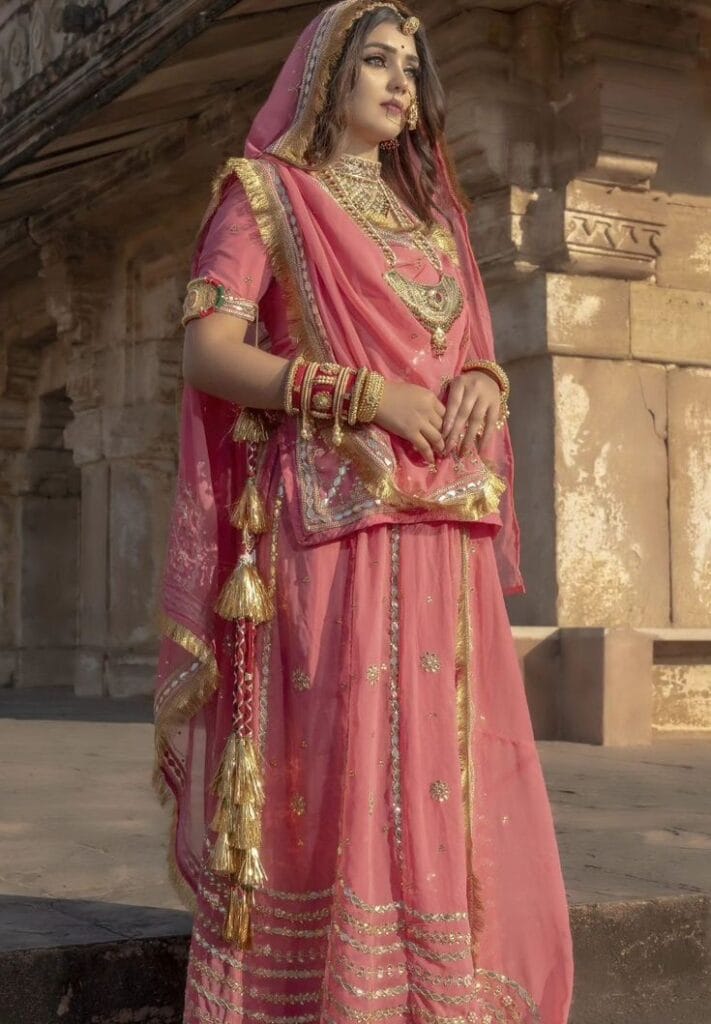
Rajasthan saree style is not mere wear; it’s a symbol of culture. Rajasthan is famous for its colorful fabrics, from Bandhani (tie-and-dye) to Leheriya (wave patterns) and intricate Gota Patti work. The saree is draped modestly and sensibly by the women of the state according to tradition, suitable for desert climatic conditions and domestic chores. The saree is often paired with an odhni (veil) or dupatta, which is draped around the head as a mark of respect as well as a shield against the sun.
Colors are also an integral part of the Rajasthan saree culture. Red, yellow, pink, and green are the colors that dominate, each symbolizing a mood or occasion. Red is often used for marriage and prosperity, while yellow is used during festivals like Teej and Gangaur. The vibrancy of the colors is symbolic of the desert state, where color breaks the aridity of the landscape.
When it comes to Rajasthan saree fashion, the very fabrics are legendary. Bandhani sarees, produced with tie-and-dye, are perhaps the most well known. They come in dotted, striped, or circular prints and are a staple for weddings and celebrations. Leheriya is another favorite, where waves of dye create a light, flowing look, ideal for the sweltering summer months.
Important occasions tend to call for Gota Patti sarees, which have golden ribbon-like embroidery. These are typically reserved for weddings and ceremonial functions, symbolizing grandeur as much as tradition. Cotton and georgette are used on a large scale for daily wear, and silks are worn on occasions.
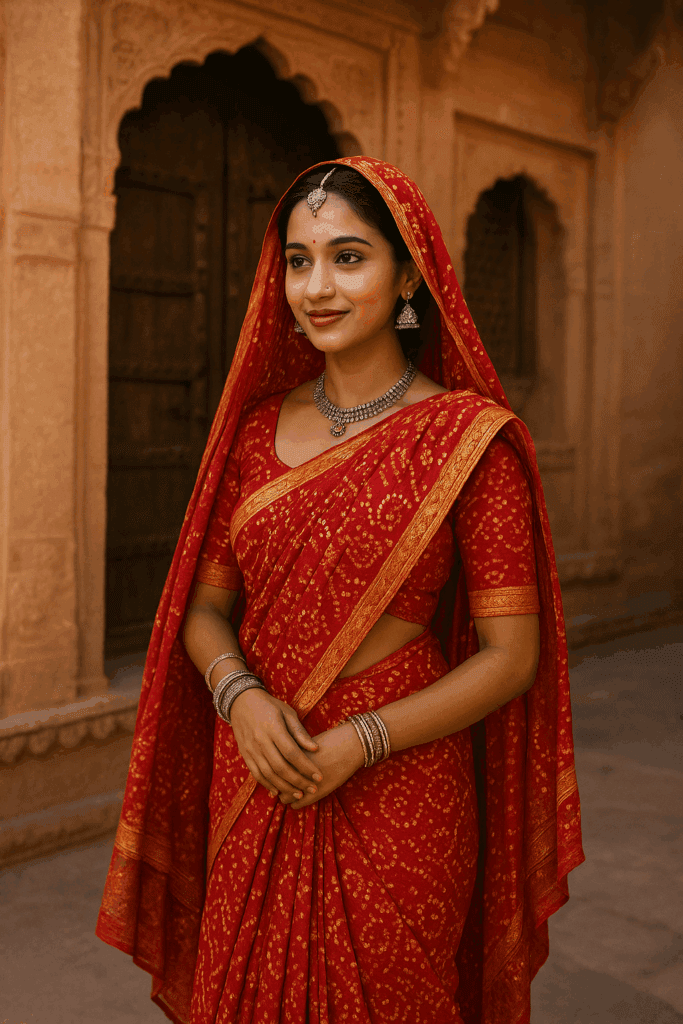
The Rajasthan style of draping the saree is distinct from the trendier Nivi style in the rest of the country. It is utilitarian, conservative, and in tune with local sentiments. The saree is draped with pleats at the back, not at the front, so that the woman can move freely, do domestic chores, or even drive a camel in the rural areas. The pallu, instead of being left loose over the shoulder, is typically brought over the head, and also serves as a veil. It also keeps the wearer safe from dust, heat, and direct sun.
This draping technique not only expresses sophistication but also embellishes the detailed designs of the saree. In Rajasthan style saree, the pallu is likely to carry the most detailed Bandhani or Gota Patti work and therefore becomes the central attraction of the whole attire.
While the classic Rajasthan saree style continues to thrive in rural areas and at festivals, city fusions have made it trendy for modern fashion. Designers like to reinvent Bandhani and Leheriya sarees in lighter fabrics, combined with trendy blouses or crop tops. Even classic Gota Patti embroidery has found a niche in fusion clothing and is trendy among young generations.
Celebrities and fashion icons have also brought the fashion of Rajasthan saree to the limelight. Bandhani and Leheriya drapes are now a big hit at weddings, destination weddings, and Indian festivals and hence have become ageless fashion statements.
How can Rajasthan saree style be talked about without mentioning its royal origin? Queens and princesses of Rajasthan used to love intricate craftsmanship. Sarees made of pure silks with intricate Gota work and bold color were a part of their attire. Even today, this practice is continued, where the wedding trousseaus of Rajasthan are incomplete without a Bandhani or Gota Patti saree.
Rajasthan saree fashion is not merely a drape, but a living tradition. It reflects the essence of the desert, the resilience of women who live in hostile climates, and the art of artisans who weave magic on fabric. Whether for everyday use or for grand wedding celebrations, the saree fashions of Rajasthan are timeless, combining utility with unmatched elegance.
Also Read –