Physical Address
304 North Cardinal St.
Dorchester Center, MA 02124
Physical Address
304 North Cardinal St.
Dorchester Center, MA 02124

India’s regional fashion culture is rich and varied, and the most elegant of them is the Kerala style half saree. Locally referred to as Langa Voni or Pavadai Davani in some of the South Indian states, the Kerala style is characterized by simplicity, elegance, and cultural heritage. The Kerala style half saree is worn by girls and women and is as much a symbol of tradition as a practical outfit for daily use and celebratory events.
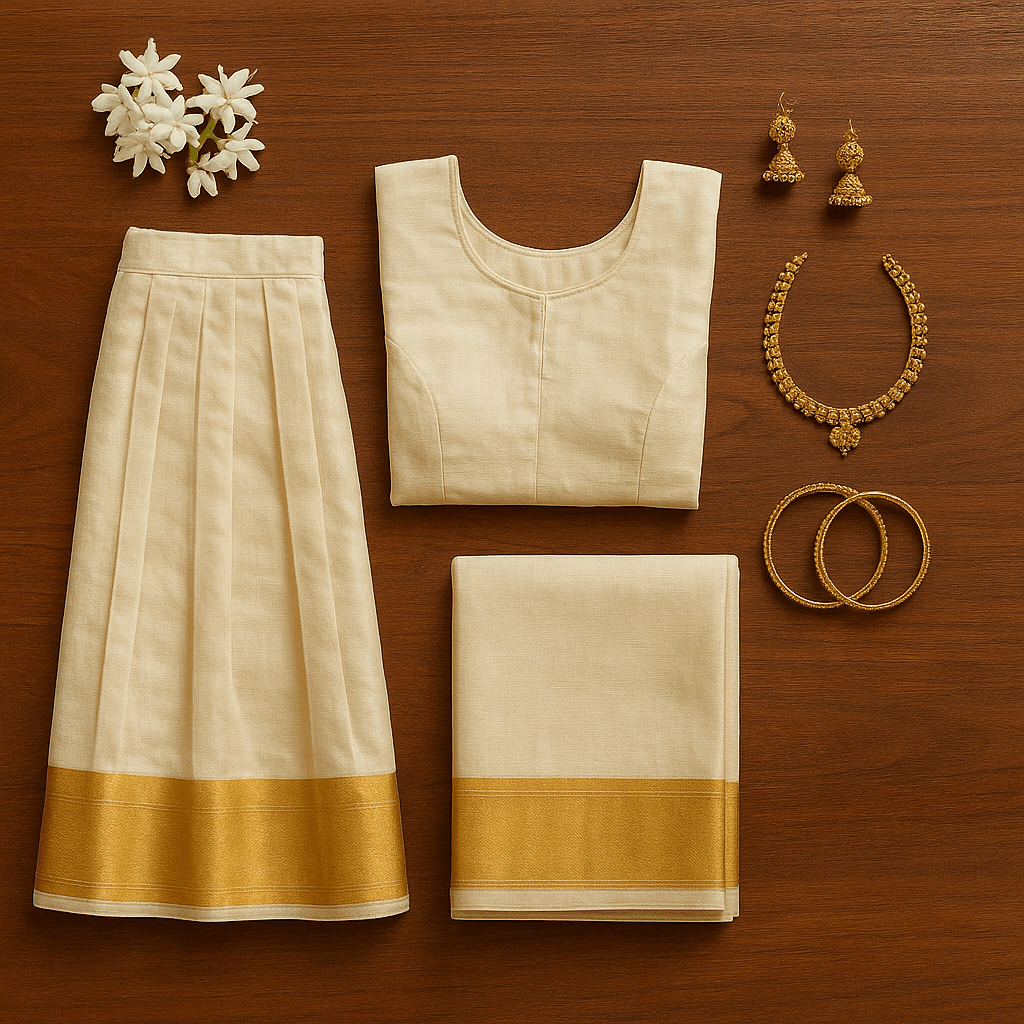
The Kerala half saree is a traditional three-piece saree, unlike the traditional six or nine-yard saree. It is made of:
Pavadai (Skirt): A long, flared skirt, typically made of silk or cotton, with a golden zari border reflecting Kerala’s penchant for simplicity and restraint.
Voni or Davani (Dupatta): A drapery that has a resemblance to a saree pallu, generally pinned or draped over the shoulder.
Blouse (Choli): Close-fitting upper body garment that goes well with the skirt and dupatta.
In contrast to the entire saree, the half saree is simpler to manage, and hence it is the favorite among young women and teenagers who are moving from childlike garment to the saree.
In Kerala, the half saree is not just a piece of clothing; it is symbolic. It is worn traditionally by young girls starting from their teens, especially for cultural ceremonies, school functions, and pilgrimages to the temple. It is often seen as a symbol of girl-to-woman transition.
During festivals such as Onam and Vishu, the half saree with Kerala’s traditional white or cream color and golden border becomes a fashion craze. It not only looks festive but also makes the individual feel part of Kerala’s culture.
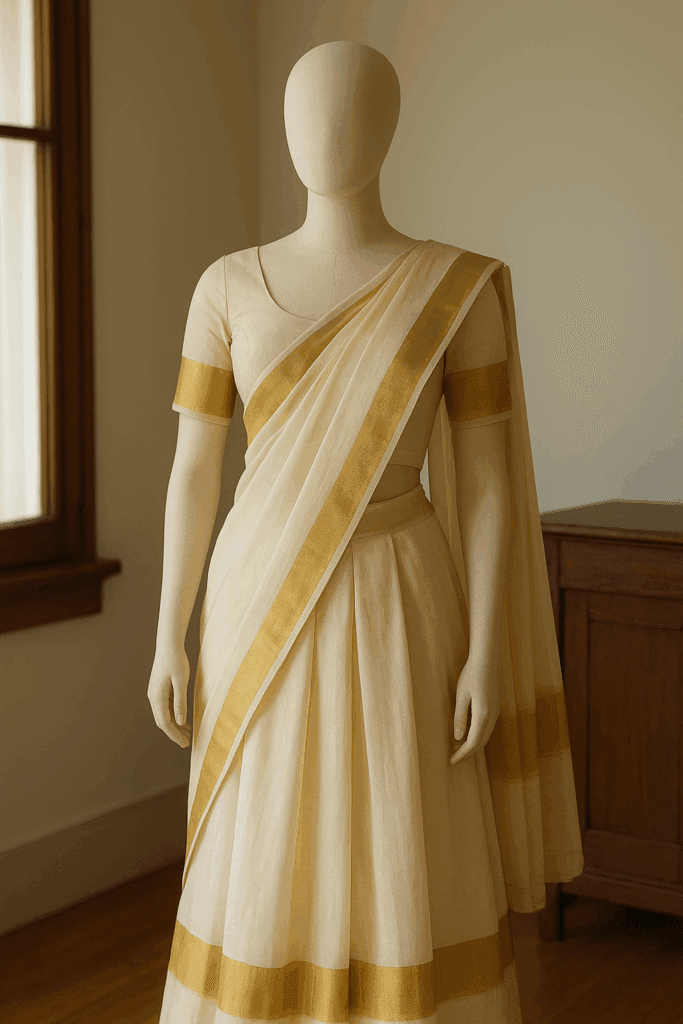
The most sought-after Kerala style half saree is made in off-white or cream-colored fabric with Kasavu borders (gold zari). However, colorful silk and cotton prints are also widely used, especially for marriages and festivals. Bright colors such as pink, green, and blue are also widely used by young girls with golden or contrasting dupattas.
The blouse patterns can differ subtly from plain elbow-length sleeves to full contemporary cuts, and the dupatta or davani is typically draped in the traditional manner for a demure and classic appearance.
Folding the Kerala half saree style is simple and elegant. It doesn’t require the numerous pleats of a saree and therefore it is the drape that is typically first introduced to young girls.
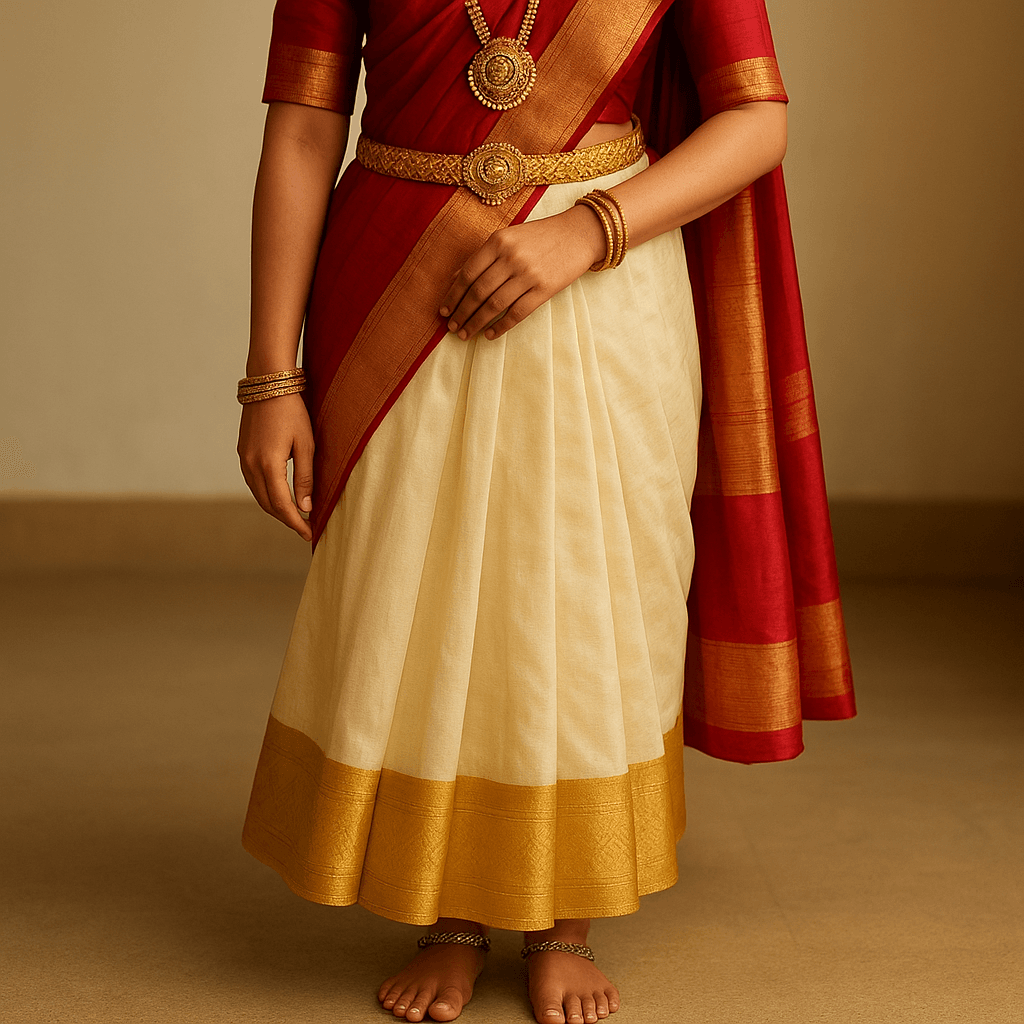
Kerala’s half saree is a comfortable, practical, and very cultural clothing. It is light in weight, so very suitable for Kerala’s climate, and its elegant method of draping makes it appropriate for all occasions.
For young women, half saree is also the first exposure to traditional clothing, instructing them in how to handle a draped cloth before progressing to wearing a saree. Half saree is also emotionally significant in families, typically being gifted during landmark events like puberty ceremonies (Ritu Kala Samskaram), weddings, and celebration events.
While traditional in its roots, the Kerala style half saree has undergone change to keep pace with current fashion. The contemporary designers play with silk mixtures, embroidered blouses, and vibrant dupattas to create it even more charming for the new generations. In spite of the transformation of the Kerala style half saree, its nature remains ageless – simplicity along with cultural heritage.
Also Read –
Assam Style Saree – Rich Tradition, Effortless Elegance, and Draping Guide