Physical Address
304 North Cardinal St.
Dorchester Center, MA 02124
Physical Address
304 North Cardinal St.
Dorchester Center, MA 02124

India’s rich cultural background can be described best by its traditional clothing, and the best description of that is the Assam style saree. The Assamese women have been wearing this saree for centuries and it is the pride of Assamese tradition, particularly the Mekhela Chador, which is the tradition of draping. The Assam style saree, unlike other state sarees, has its own drape, appearance, and weaving tradition, so it is a classic piece of clothing which is praised generation after generation.
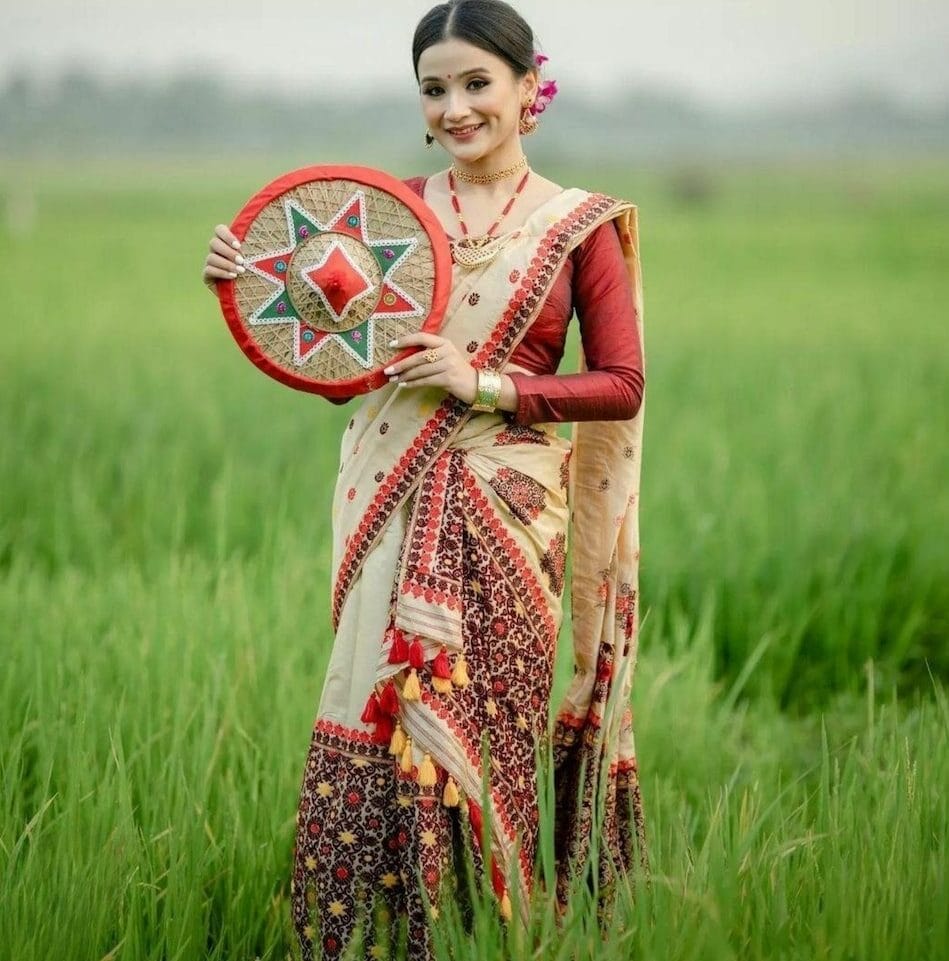
The Assam saree, also known as Mekhela Chador, is a heritage saree. It is made by Assamese women and is commonly handloomed with natural fabrics like mulberry silk (known locally as Pat), Muga silk, or Eri silk. All these silks are native to Assam and are well known all over the globe for their texture and durability.
The Muga silk, therefore, is produced exclusively in Assam and prized for its natural yellowish sheen, and is most suitable for ceremonial and festival purposes. An Assam type saree being draped on cultural festivals like Bihu, marriage ceremonies, or religious rituals is observed to be a gesture of respect towards tradition.
In contrast to the single cloth of the conventional saree, Assam style saree or Mekhela Chador has two major components:
Mekhela – The lower, skirt-like portion is pleated and folded around the waist. It is typically in the shape of a cylinder and far easier to drape than the numerous pleats of other sarees.
Chador – The upper half is wrapped like a normal saree pallu, over the shoulder and top.
Blouse – A conventional blouse finishes the outfit, which is usually adorned with Assamese patterns.
Such two-piece construction makes the Assam style saree both functional and appealing at the same time.
The beauty about the Assam style saree is the intricate handwoven designs. The most sought-after designs are:
These patterns are not just for ornamentation but also representative of Assamese way of life and culture. The borders are typically ornately woven, providing the garment with depth.
It is simple to wrap an Assam saree but requires practice. Following is a basic step-by-step guide to wrapping it properly:
The whole process is faster than draping a normal saree and therefore most of the Assamese women prefer to wear it both for daily and ceremonial purposes.
The Assam saree is not only ornamentation but useful as well. The two-part saree is easy to wear and comfortable to be in skin contact with, especially in the warm and humid climate of Assam. Additionally, the use of handwoven silks like Pat and Muga means that the saree will be durable and will last for years, typically being passed down as a family heirloom.
Its simplicity in design with richness of silk and motifs makes it suitable for casual wear as well as celebratory wear. From young women to old grandmothers, the Assam style saree is a pick to fit all.
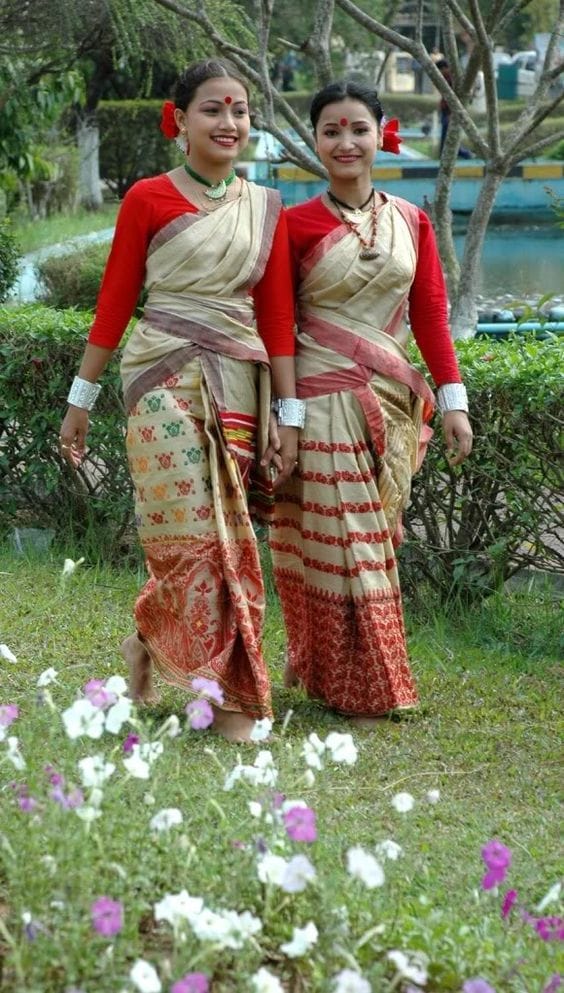
Even though traditional in style, the Assam style saree is also trendy these days. Fashion designers have experimented with new colors, trendy blouses, and light fabric to make it trendy for the young generation of today. Celebrities and fashionistas dressing in Mekhela Chador to red carpet events and weddings have also made it popular globally. The Assam style saree is not only a trend; it is a living testimony to the culture, creativity, and sophistication of Assam. From the distinctive draping style to the symbolic patterns and beautiful fabrics, it still retains its uniqueness in Indian fashion. For anyone interested to experience traditional clothes that are beautiful and comfortable, the Assam style saree is an experience of a lifetime.
Also Read –
Karnataka Style Saree – Tradition, Draping, and Timeless Beauty
Rajasthan Saree Style – The Timeless Drapes of the Desert State