Physical Address
304 North Cardinal St.
Dorchester Center, MA 02124
Physical Address
304 North Cardinal St.
Dorchester Center, MA 02124

The saree is not just a piece of clothing; it is a symbolically eternal expression of India’s heritage and culture. It is special in that the same six to nine yards of fabric are draped in so many different manners. Indian women, coast to coast and north to south, have created their own saree draping styles, each imbued with rich cultural significance, comfort, and beauty.
Some of the drapes were created for their aesthetics, some for practicality in daily work, and some downright for weddings and rituals. With new interpretations and innovations by designers today, saree draping styles have also become increasingly versatile and varied.
This detailed guidebook will lead you through a tour of India’s most sought-after saree draping styles, discovering from whence they originated precisely, how they are to be done, and why they are still so sought after.
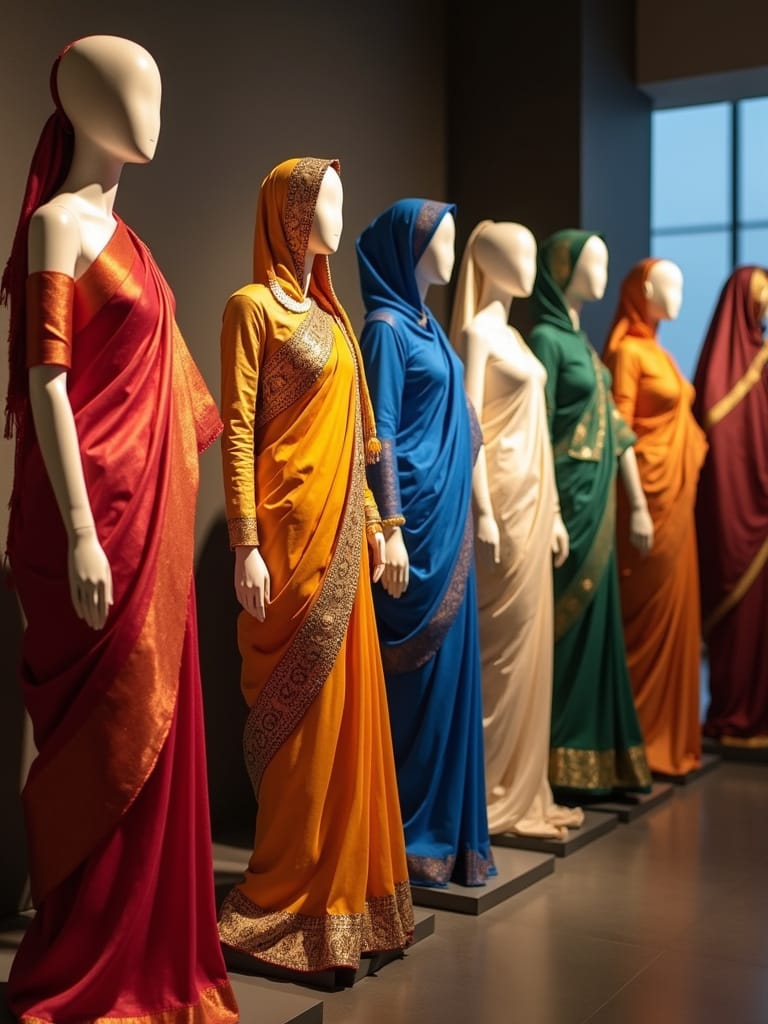
Sarees are also known as “one garment, many possibilities.” Not being similar to sewn clothes, the saree enables women to try out different saree draping stylesaccording to:
This flexibility is also the reason that saree draping styles survived for centuries and remain the epitome of fashion even now.
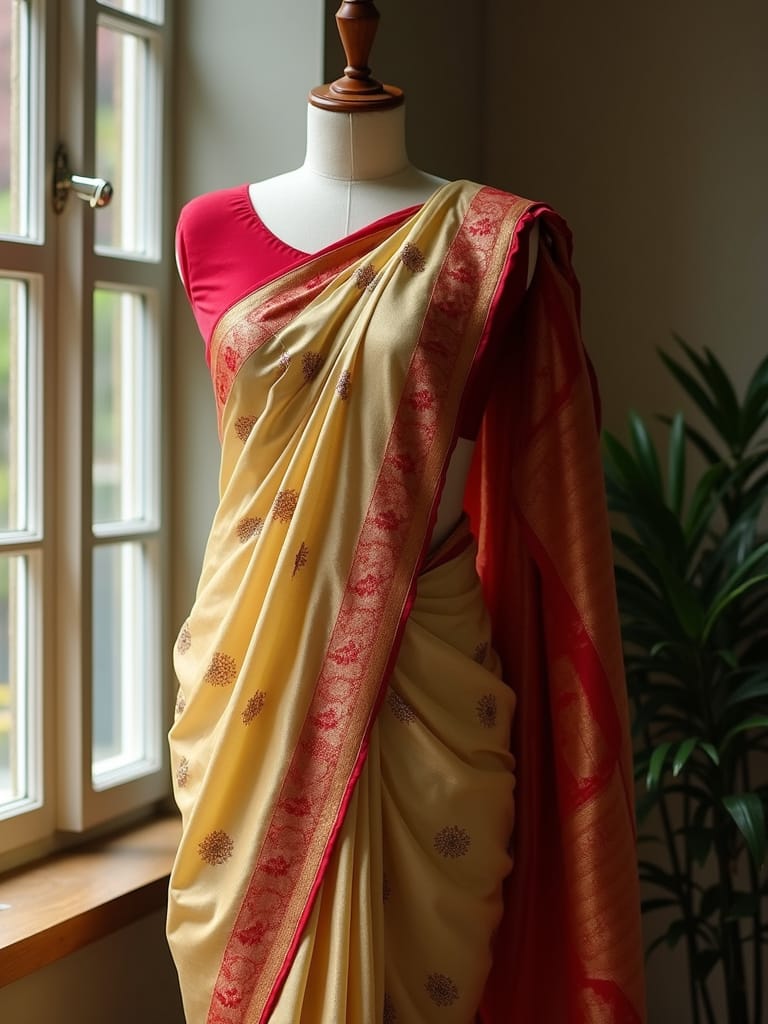
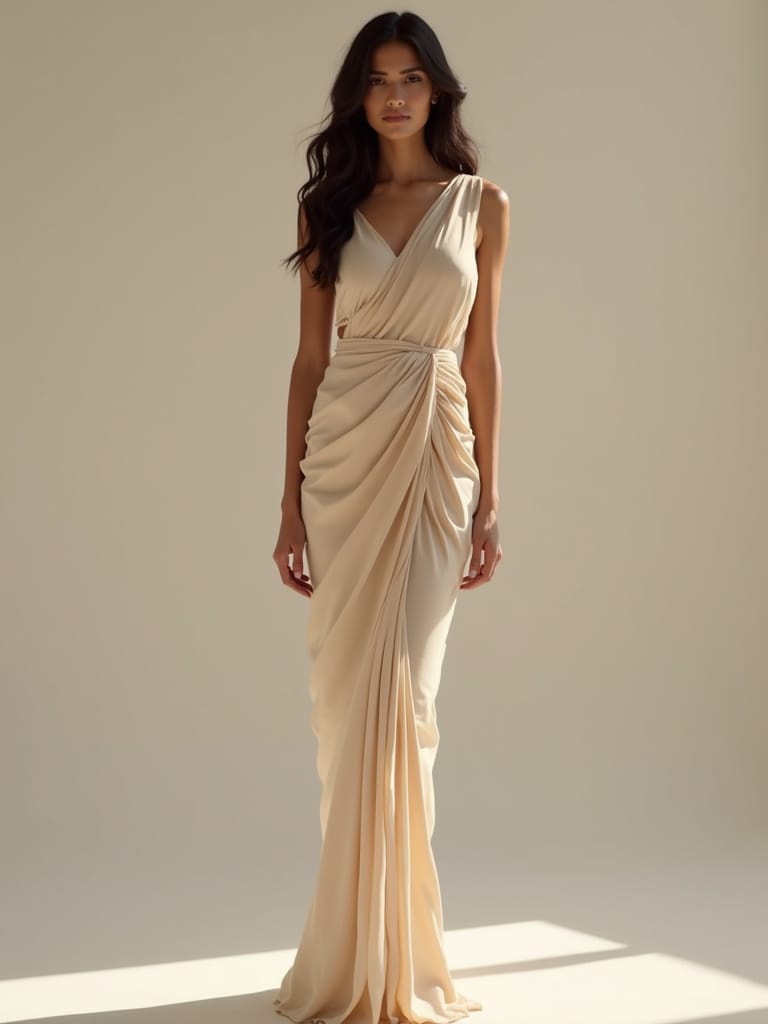
The most popular of all the saree drape styles is Andhra Pradesh’s Nivi drape.
How it is worn: It is draped over the waist, pleats folded in front, and the pallu is draped over the shoulder on the left side.
Versatility: It can be used for cotton for everyday needs or wedding silks.
Why it lasts: It’s trendy but casual, and therefore perfect for nearly any event.
The majority of the contemporary fashions, such as the belted and pant sarees, have been derived from the Nivi style.
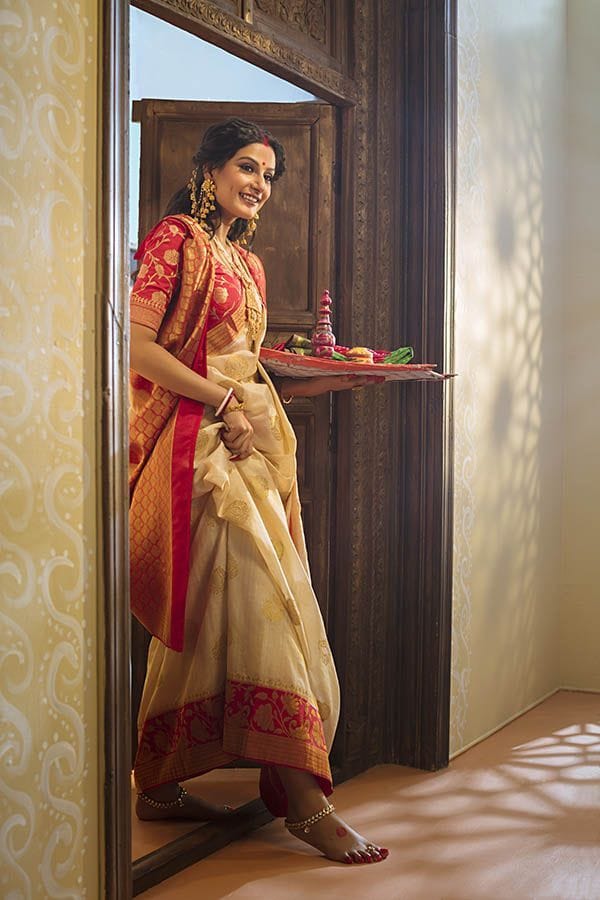
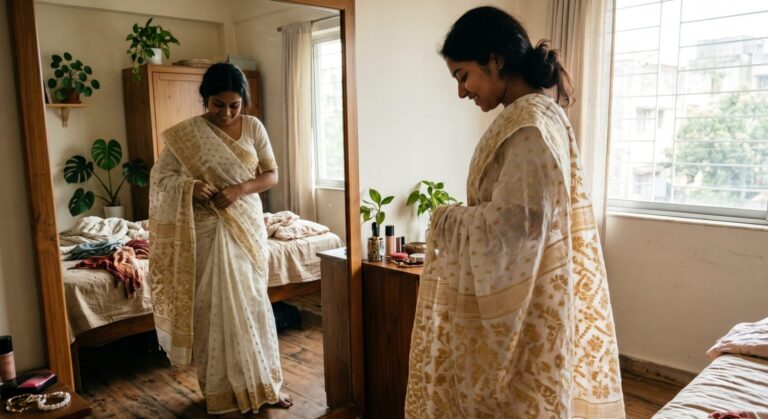
The Bengali saree is elegant and graceful.
Signature look: No front pleats, pallu draped over both shoulders. House keys used to be knotted onto the pallu as a sign of responsibility.
Fabric options: Red border on white or off-white sarees are classic, but silks and tussar are also favored.
Peak periods: Durga Puja, weddings, and festivals.
This is a casual but extremely recognizable style, and one of the most recognizable saree styles in India.
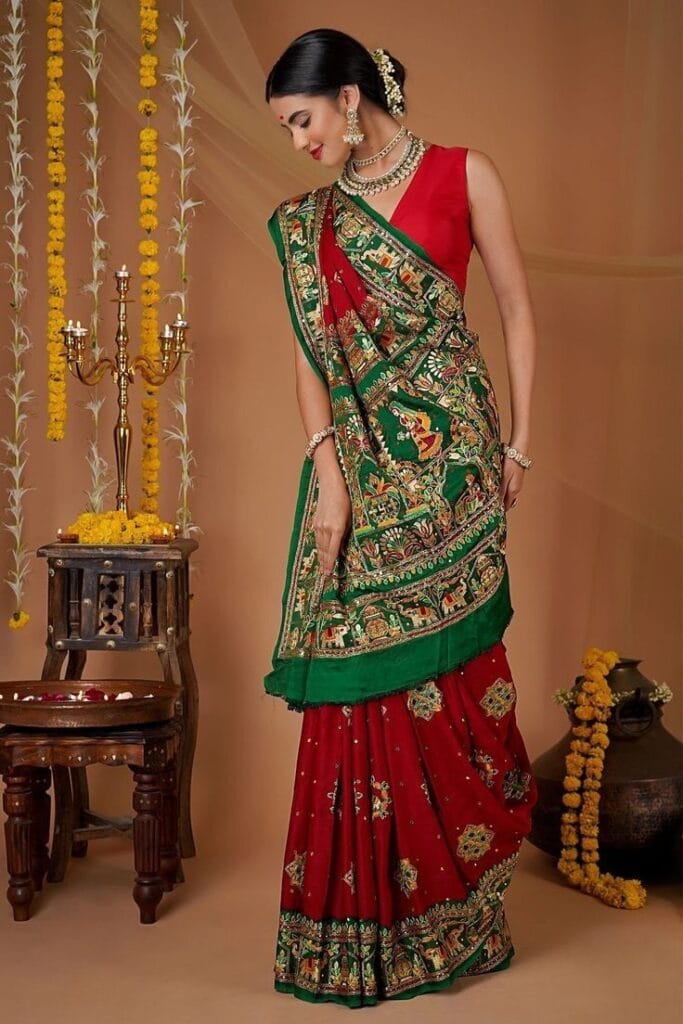
Gujarati style, or Seedha Pallu, is one which advances the gaze.
Draping technique: Unlike the Nivi, the pallu is folded over the right shoulder front and draped over the body.
Why it’s popular: It has embroidery, beading, or zari on the pallu.
Best events: Navratri, garba nights, and Gujarati weddings.
Seedha Pallu is not only celebratory but also functional in the sense that it keeps the pallu in place during celebration.
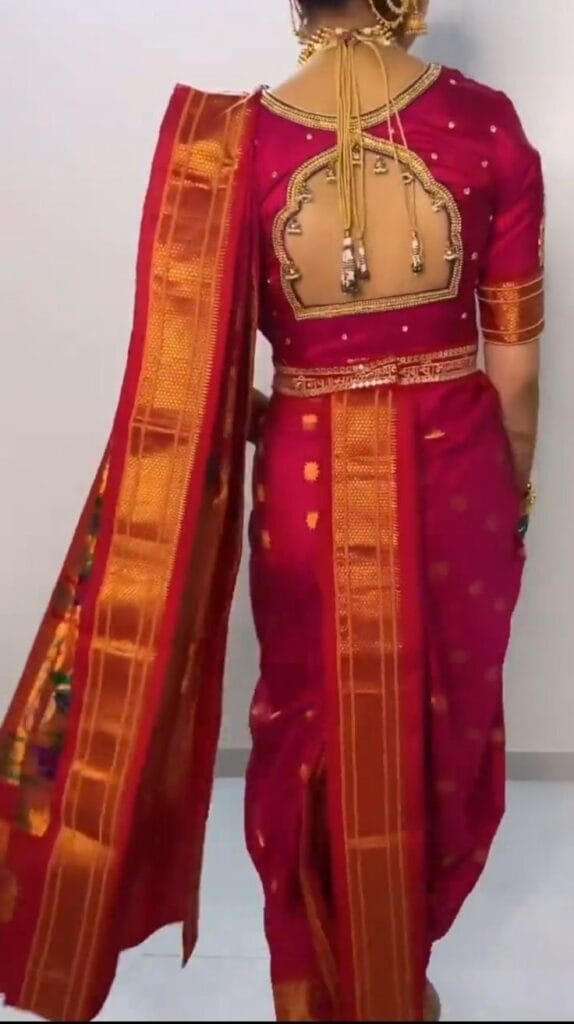
The Nauvari saree draping style is strong and graceful at the same time.
Meaning: “Nauvari” literally translates to nine yards.
Style of draping: Draped as a dhoti, with relaxed legs for ease of movement.
Cultural heritage: This drape came into being during the Maratha period and represented independence and power.
Occasions: Used during festive seasons such as Gudi Padwa and wedding ceremonies, and performing Lavani dance.
Nauvari saree is one of the most distinctive saree styles, representing power and beauty.
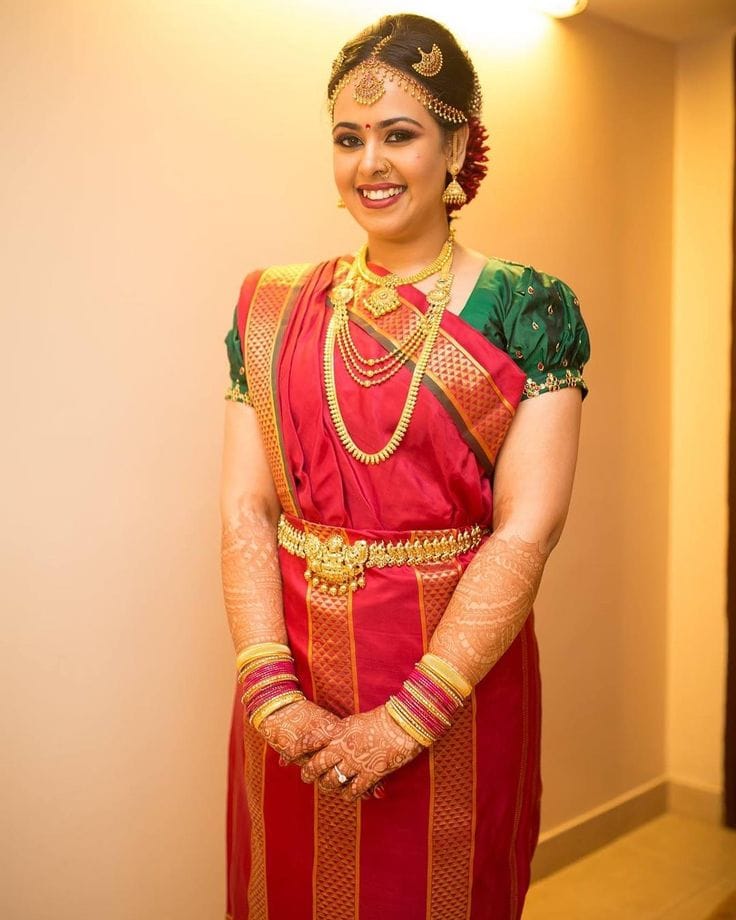
Madisar is the customary drape for Tamil Brahmin women.
How it is worn: Worn with a nine-yard saree, half is a dhoti and half is the Nivi type.
Functions: Shrine rituals, Brahmin weddings, and religious rituals.
Symbolism: Considered sacred and closely akin to tradition.
Although it is difficult to drape, it is highly culturally appropriate.
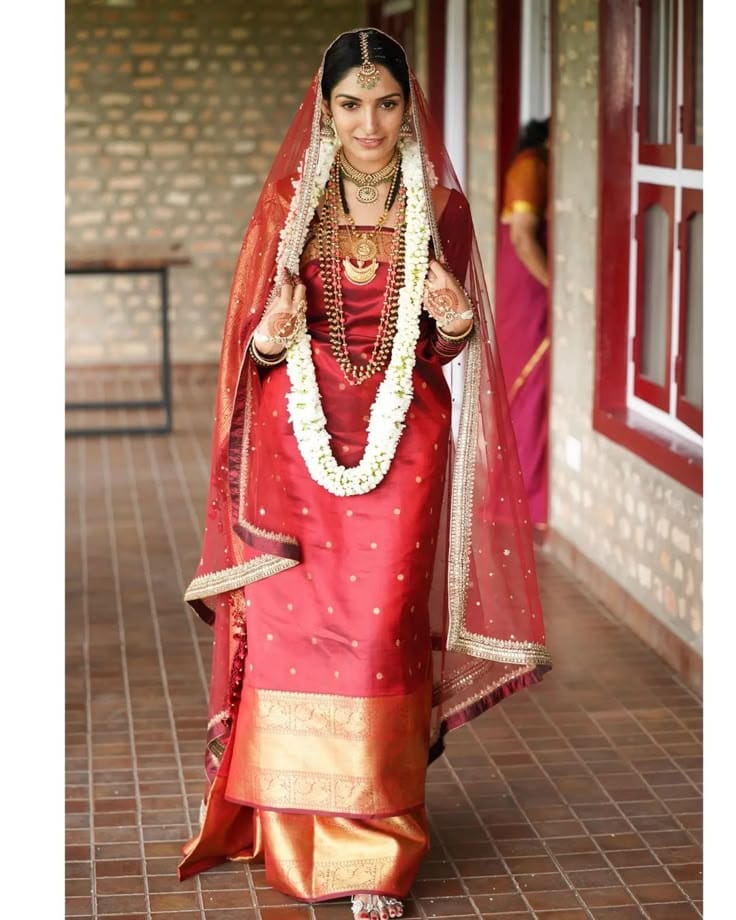
Karnataka’s Coorg women wear a very unique style in sarees.
Special detail: The pleats are folded at the back, not as in most patterns, and the pallu is folded inwards from the back and pinned over the right shoulder.
Occasisons: Coorgi wedding and ceremonial uses.
Accessories: Accompanied by a head veil, it appears royal.
This saree tradition is a symbol of Kodava society.
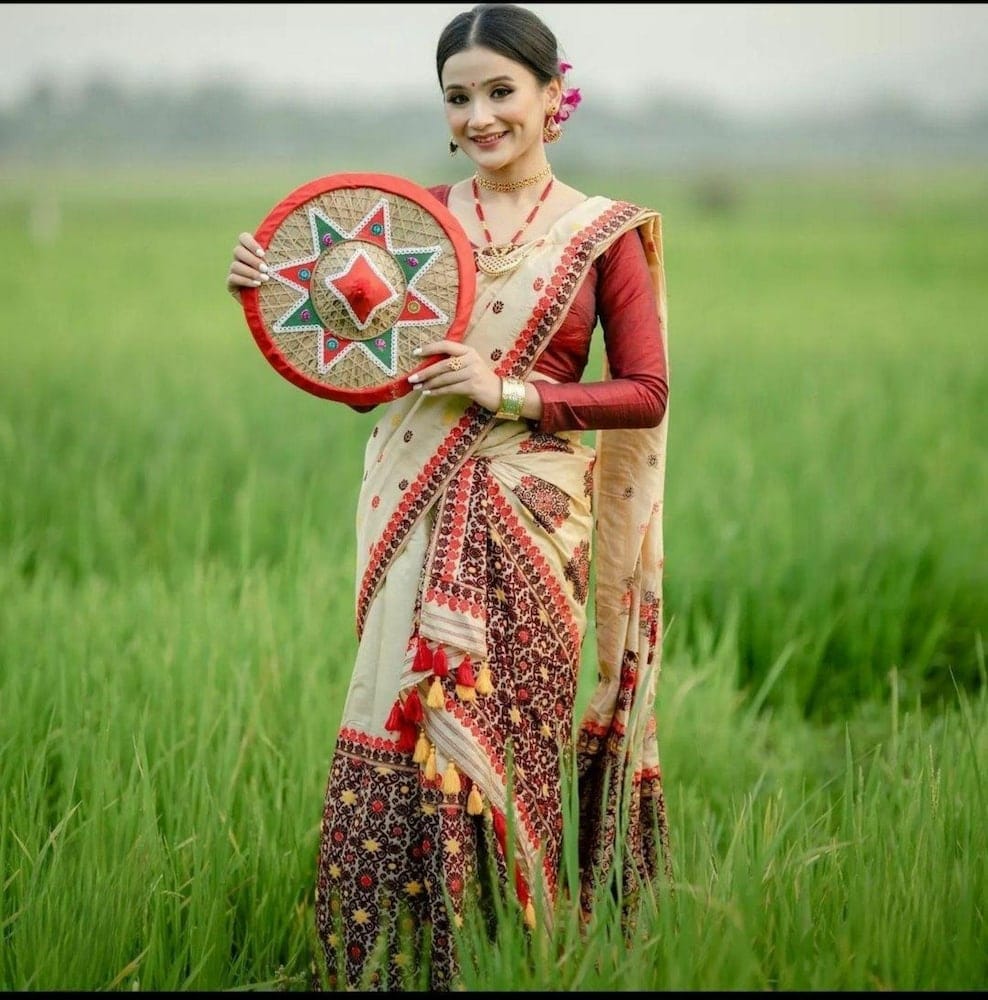
Mekhela Chador is Assamese pride. It is not a saree technically, but it is included amongst the sarees because of the similarity.
Two-piece drape: Mekhela (the skirt) and Chador (the wrap).
Heritage of fabric: Traditionally, Muga silk, Pat silk, or Eri silk is woven.
Activities: Bihu festivals, wedding ceremonies, and culture festivals.
It is beautiful in the simplicity of its flow, and it is one of the northeast’s most elegant saree draping styles.
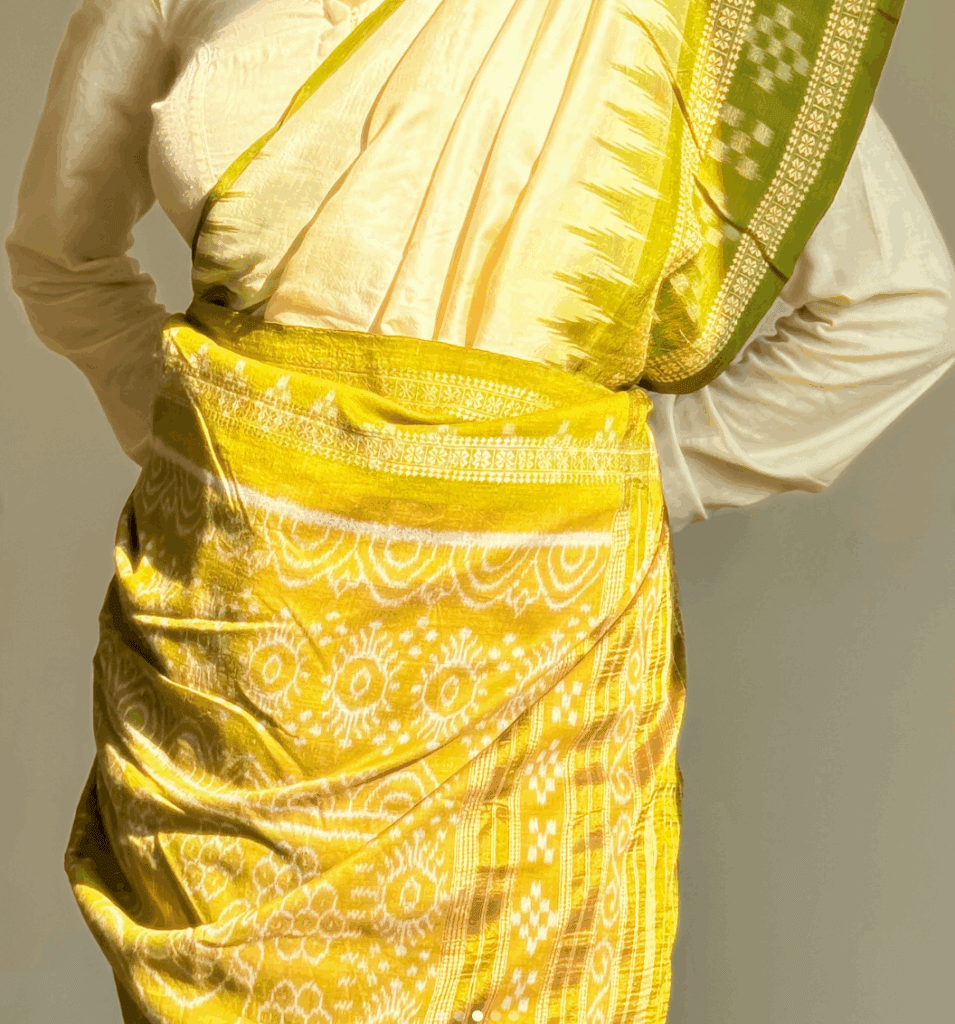
The Odisha style has a couple of signature twists.
Pleats: Folded at the back but not at the front.
Pallu: Falling from the back and covering the front chest.
Bomkai silks and Sambalpuri ikats are well-known fabrics.
Ideal for: Temple rituals, festivities, and cultural festivals.
This draping style is an evidence of Odisha’s weaving expertise and love for bold prints.
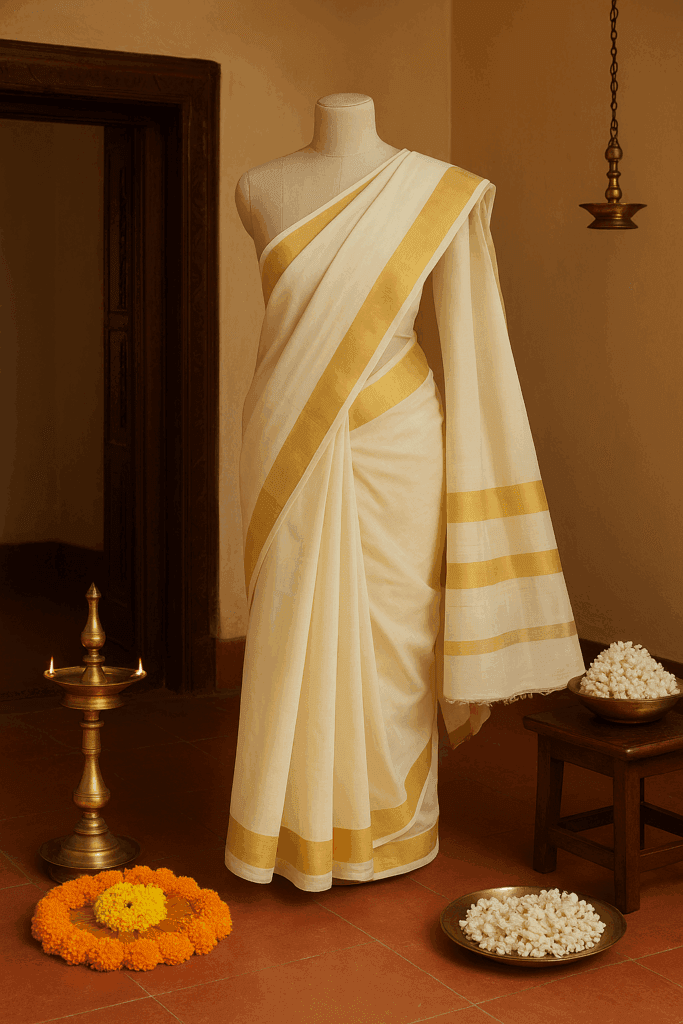
Kerala also has a classical two-piece saree called Mundum Neriyathum.
Appearance: Typically white or cream with golden bordered zari.
Fashion: Mundu is used as lower attire and Neriyathu draped diagonally across the chest.
Festivals: Temple rituals, Vishu, and Onam.
The saree draping is a symbol of simplicity, innocence, and cultural elegance.
India’s tribal population also possesses a culture of sarees.
Jharkhand & Chhattisgarh: Sarees are tied up tightly to allow unrestricted movement for agricultural work.
Northeast tribes: Sarees are shorter, usually paired with woven shawls.
Andhra Pradesh tribals: Blouse-less traditional wraps in the past.
These saree draping styles are never going to be complicated but say a lot about how tradition is related to lifestyle.
There are fewer unique saree patterns in northern India compared to the south but regional variations exist.
Uttar Pradesh: Seedha Pallu is also worn by women on ritual occasions.
Bihar: Widespread use of tussar silk sarees, both in Odia and Nivi wear.
Punjab & Haryana: Sarees are infrequent but if at all, in simple Nivi style, with heavy dupattas.
These saree styles demonstrate how neighboring states’ cultures cross.
As fashion continues to evolve, saree draping continues to transform. Contemporary fashion designers attempt fusion draping nowadays.
(Have a look at these Top Celebrity Bollywood Lehengas)
These new saree styles introduce the classic saree to the world of fashion.
For brides, saree draping is far more significant than the material itself.
| Region | Draping Style | Unique Feature | Best Fabrics | Occasions |
|---|---|---|---|---|
| Andhra Pradesh | Nivi Style | Pallu on left shoulder | Silk, Cotton | Weddings, Daily Wear |
| West Bengal | Bengali Style | Pallu on both shoulders | Tussar, Cotton | Durga Puja, Marriages |
| Gujarat | Seedha Pallu | Pallu in front | Embroidered Silks | Navratri, Weddings |
| Maharashtra | Nauvari | Nine yards, dhoti-type | Paithani cotton | Gudi Padwa, Weddings |
| Tamil Nadu | Madisar | Sacred nine-yard drapery | Kanjeevaram | Weddings, Rituals |
| Karnataka (Coorg) | Kodagu Style | Pleats at back | Silk, Cotton | Weddings, Local Festivals |
| Assam | Mekhela Chador | Two-piece drape | Muga, Pat, Eri Silk | Bihu, Weddings |
| Odisha | Odia Style | Pleats at the back, pallu at the front | Sambalpuri, Bomkai | Cultural Activities |
| Kerala | Mundum Neriyathum | White-gold two-piece | Kasavu, Cotton | Onam, Vishu |
| Current Trends | Pant/Lehenga/Belted Fusion experiments | Fusion experiments | Georgette, Net, Satin | Parties, Receptions |
Saree design or draping is not merely fashion but a living tradition that symbolizes India’s history, culture, and identity. Every drape, however simple the Nivi or however colorful the Nauvari or the festive Bengali drape, has a story to tell. Even if designers bring in new-age zing, traditional saree draping styles are in fashion. They are not mere methods of dressing up a piece of clothing but a living tradition that bridges the past and the present. For each woman, learning new ways of draping a saree is like opening the window to India’s rich cultural heritage.