Physical Address
304 North Cardinal St.
Dorchester Center, MA 02124
Physical Address
304 North Cardinal St.
Dorchester Center, MA 02124

Rajasthan is renowned for its hues, rich heritage, and ethnic style of clothing. Amongst its most symbolic fashion is the Marwadi style saree, a drape symbolizing elegance, modesty, and royalty. The women of Rajasthan, particularly from the Marwar region, wear this saree style, which tells us more than clothes – it tells us about heritage and identity.
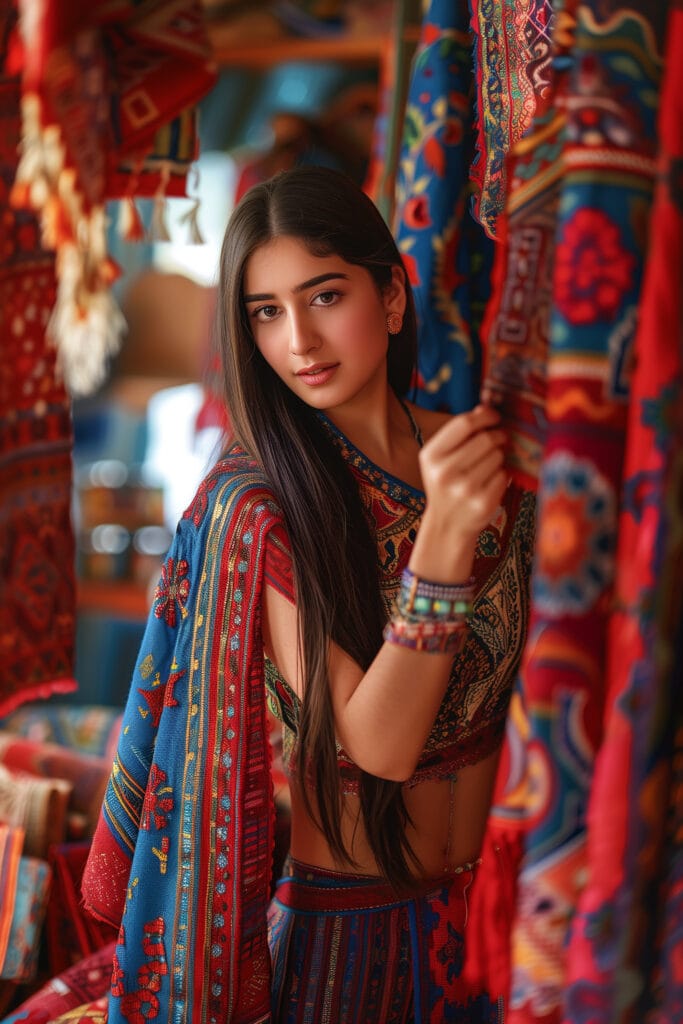
Marwadi style saree is the native style of saree draping in Rajasthan by women. Contrary to the widely practiced Nivi style drape, this is all about being refined and also of practical aptness for desert living and household work. The sarees of this style are generally composed of fabrics as light as chiffon, georgette, cotton or Bandhani prints, suitable for the weather of Rajasthan.
Vibrant shades of yellow, orange, red, pink, and green predominate Marwadi sarees. They usually exist in traditional tie-and-dye (Bandhej) patterns, Leheriya designs, and heavy gota-patti embroidery, which provides the saree a regal and festive look.
For Marwadi women, sarees are not mere clothes; they are symbols of tradition, modesty, and pride. The drape also symbolizes social and cultural values, with the pallu (veil) covering the head being a sign of respect, particularly in the presence of elders and religious ceremonies.
Brides and married women usually wear heavily ornamented Marwadi style sarees in red or maroon colors during wedding and festivals, which happen to be auspicious. The bright colors and traditional designs symbolize family honor, prosperity, and happiness.
Bandhani Sarees: Tie-and-dye is one of the oldest Rajasthan’s art forms and a signature of the Marwadi style saree.
Leheriya Sarees: Sarees with wavy patterns are especially used on festive occasions like Teej.
Gota-Patti Sarees: Famous for ornate golden embroidery, they are favored on wedding and festive wear.
Cotton & Chiffon Sarees: Daily Wear Marwadi sarees are generally constructed from lightweight cotton or chiffon with least possible work for ease in scorching weather.
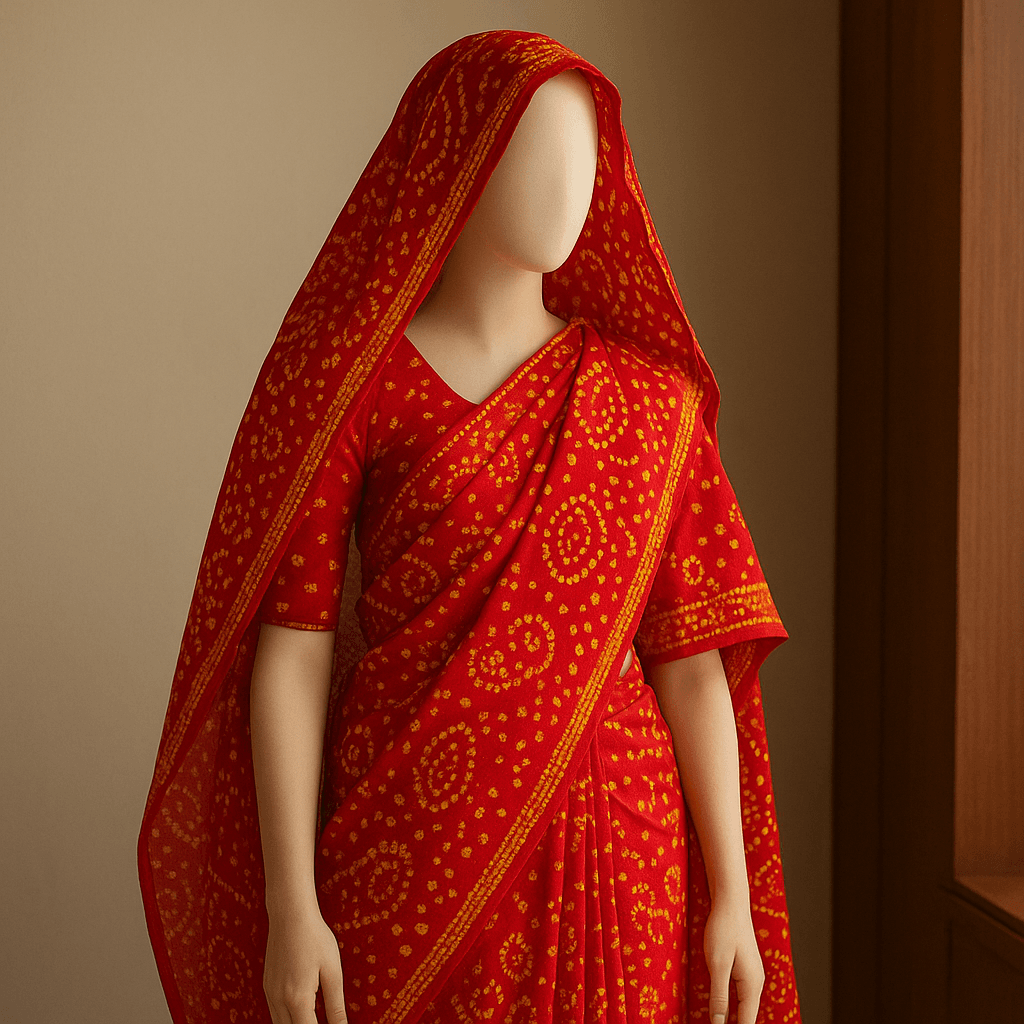
The drape of the Marwadi style saree is not like the typical saree drape and is designed to meet the needs of daily life while not sacrificing on appearance.
Cover the Head (Optional):
Marwadi women would traditionally cover their heads using the pallu as a gesture of respect during ceremonies or family reunions.
This draping is not only stunning but also offers liberty of movement, which is essential in Rajasthan’s way of life.
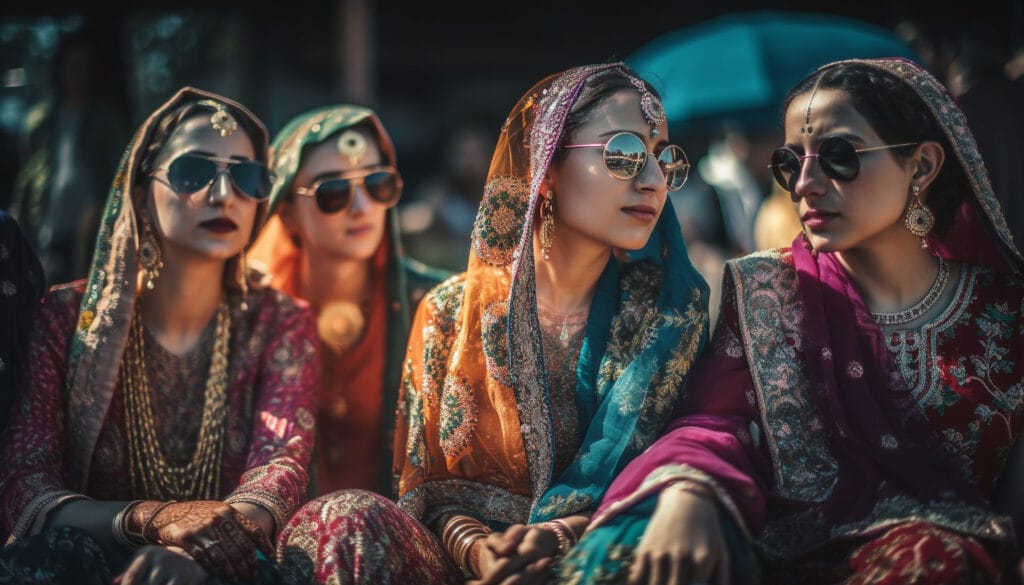
Marwadi style saree is unique in the way that it balances tradition with functionality. The pallu drape at the front highlights the saree’s fine work, especially Bandhani or Gota-Patti embroidery, thereby making it visible at the front. In doing so, the style is modest and modest, maintaining the attire’s elegance and decorum. Even now, the Marwadi style saree is worn with pride on weddings, pujas, and local celebrations. It is lighter, trendier, and more manageable in its newer forms, but the spirit of tradition is preserved.
Also Read –
Kerala Style Half Saree – Tradition, Draping, and Cultural Grace