Physical Address
304 North Cardinal St.
Dorchester Center, MA 02124
Physical Address
304 North Cardinal St.
Dorchester Center, MA 02124

The various draping styles of Indian sarees showcase the diverse cultural heritage which exists throughout the entire country. The Bengali style saree maintains its status as a traditional Indian draping method which displays exceptional beauty. This draping style which features front pleats and wide decorative borders and a flowing pallu has served as a cultural symbol of Bengal’s timeless beauty for many centuries. Durga Puja celebrations and traditional Bengali weddings become more beautiful when women wear the Bengali style saree because this outfit shows their religious devotion and cultural heritage and their elegant appearance.
People appreciate the Bengali saree drape because it presents a visually pleasing design which contains deep cultural meaning. The loose and graceful draping technique allows the intricate weaves and borders of the saree to be displayed beautifully which makes it a popular choice during important religious festivals and formal events.
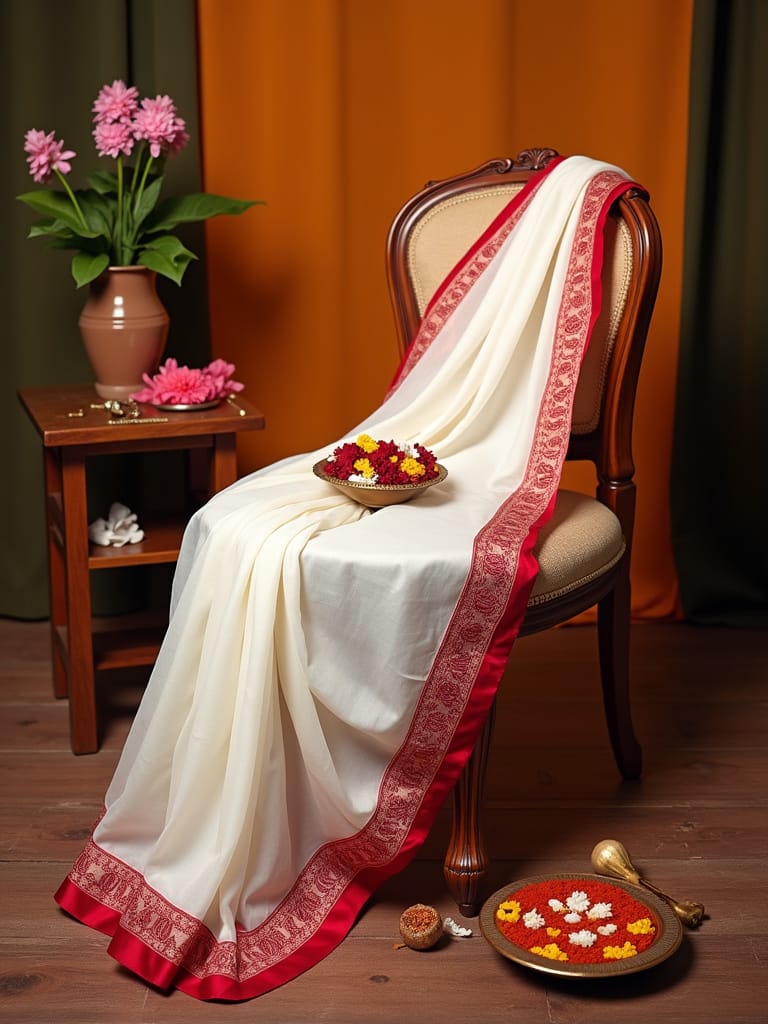
Bengali saree style has its origins in the old Bengal culture, going back centuries. While the Nivi drape that became popular in the rest of British India lost its connection with its local style, the Bengali drape stayed true to its local style for centuries. Bengali women, in the past, would wear sarees without petticoats or blouses, pleating the fabric in utilitarian as well as fashionable methods.
The Bengali draping style developed into a fashion that became an essential part of Bengali cultural identity because it transformed the Bengali saree into a traditional garment that represented cultural pride. The red-bordered white saree known as the Laal Paar Saree together with all its traditional elements serves as one of the most important symbols of Bengali culture.
The Bengali saree drape has achieved widespread recognition throughout Indian culture because it has been depicted in numerous artworks and literary works and cinematic productions.
Traditional Bengali sarees display their authentic appearance through their handloom Tant and Baluchari sarees which display both wide borders and intricate pallus.
The Bengali drape uses two-pallu design through the double shoulder pallu loop technique which creates its double pallu effect.
The drape creates a natural flowing look through its design which requires only minimal pinning and maintains its unstructured appearance.
The Bengali style saree serves as the traditional garment for Durga Puja and wedding ceremonies and religious events and customary social functions.
The red and white color combination holds deep cultural significance in Bengali traditions because it represents both pure and prosperous feminine strength.
The elegant drape showcases saree fabric beauty while it provides the wearer with a sophisticated and graceful appearance.
The Bengali saree draping is unique in the sense that it does not rely on too many pleats or complex tucks. It relies on loose folds and double-draped pallu instead. That provides a royal look and emphasizes the fabric and borders of the saree.
There are two primary forms:
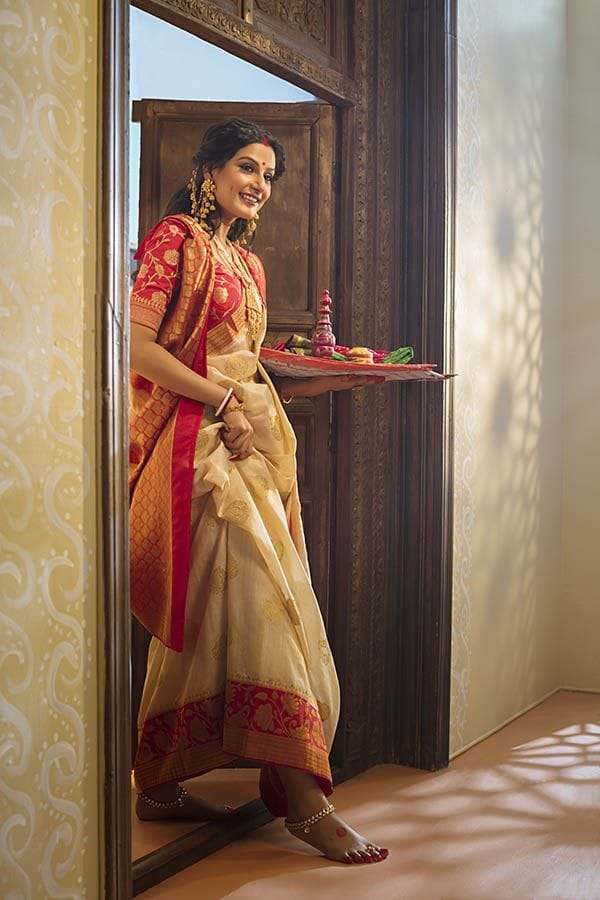
Bengali saree draping is easier than you think. Just follow the step-by-step process below:
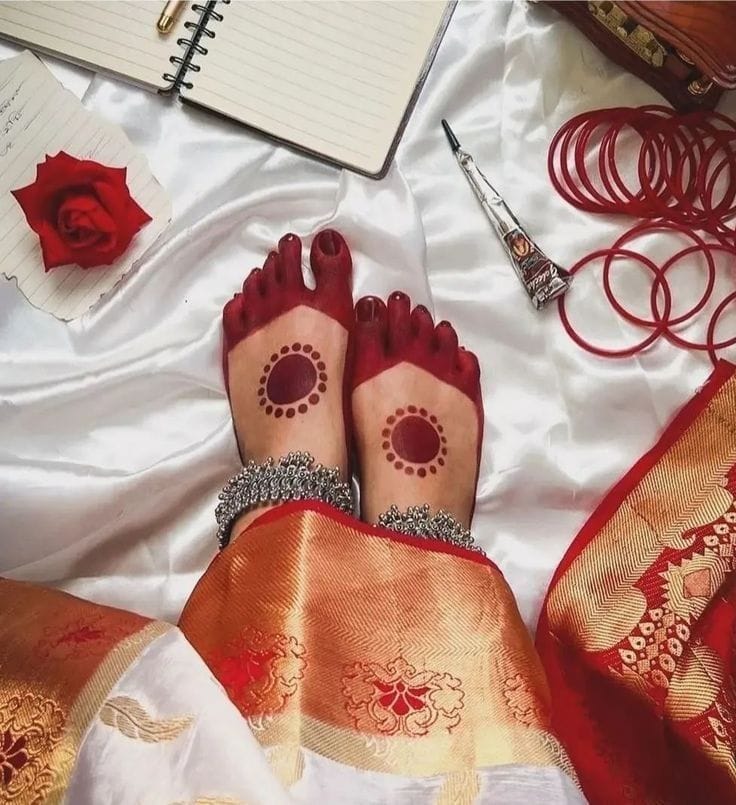
Bengali saree style is typically combined with the traditional accessories and styling to add to the cultural appearance:
Shakha Pola Bangles – Red and white coral and conch shell bangles of married women.
Gold Jewellery – Heavy gold necklaces, jhumkas, and waist belts feature prominently on festive wear.
Sindoor and Bindi – Bengali style is marked by a large red circular bindi and vermilion hair and forehead parting.
Hair style – A sophisticated bun tied well with flowers.
Bengali style saree is most suitable in heavy drape fabrics. Such sarees are the following:
Tant Sarees – Light-weight cotton sarees ideal for everyday draping.
Baluchari Sarees – Heavy silk sarees with mythological prints, best suited for wedding and festive purposes.
Garad Sarees – red bordered white sarees, the most symbolic of Durga Puja.
Jamdani Sarees – Beautifully crafted handloom sarees that epitomize Bengali craftsmanship.
Bengali saree style is not just a garment but a wonderful reflection of culture. It symbolizes Bengali culture, particularly Durga Puja, as red border sarees are worn by women and rituals such as Sindoor Khela are performed. It has also reached popular culture, with films and books featuring Bengali women in this style to highlight grace, intelligence, and strength. From Rabindranath Tagore’s tales to Bollywood movies, the Bengali style saree is an ever-enduring symbol of elegance.
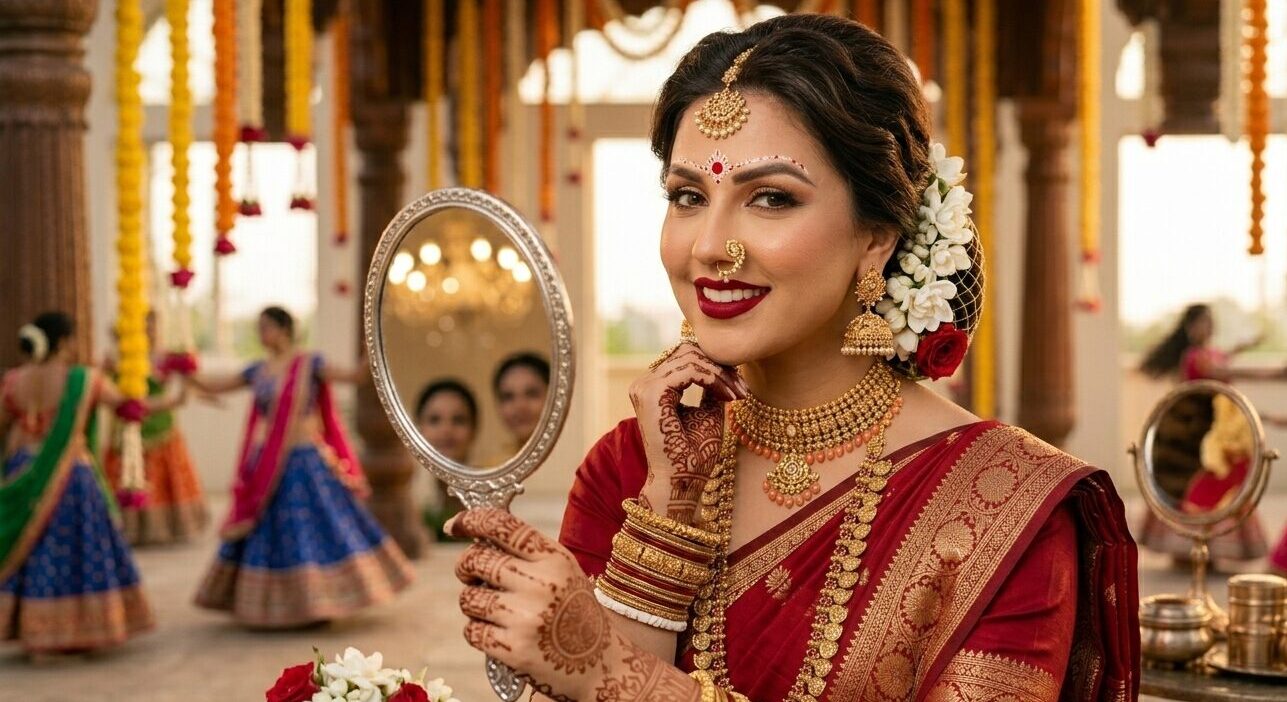
The main cultural celebration for Bengal people exists as Durga Puja, which uses Bengali sarees as its main festive element. Women often wear red-bordered white sarees and perform traditional rituals while dressed in this drape, creating one of the most iconic visuals associated with the festival.
Today, women embrace readymade or pre-stitched Bengali style sarees for the sake of convenience. Fashion designers also play around with fabrics, mixing modern cuts with centuries-old draping. But the centuries-old red and white Bengali saree remains a hit among brides and party wear, carrying the tradition forward through generations. Bengali style saree is one of the most beautiful draping styles of India. Its origin, cultural heritage, and ages-old timelessness make it an all-time favorite among women of Bengal and other places. Whether draped on an ordinary day in light weight cottons or made-up on wedding and Durga Puja, the Bengali style saree will always be an icon of tradition and beauty.
Also Read –